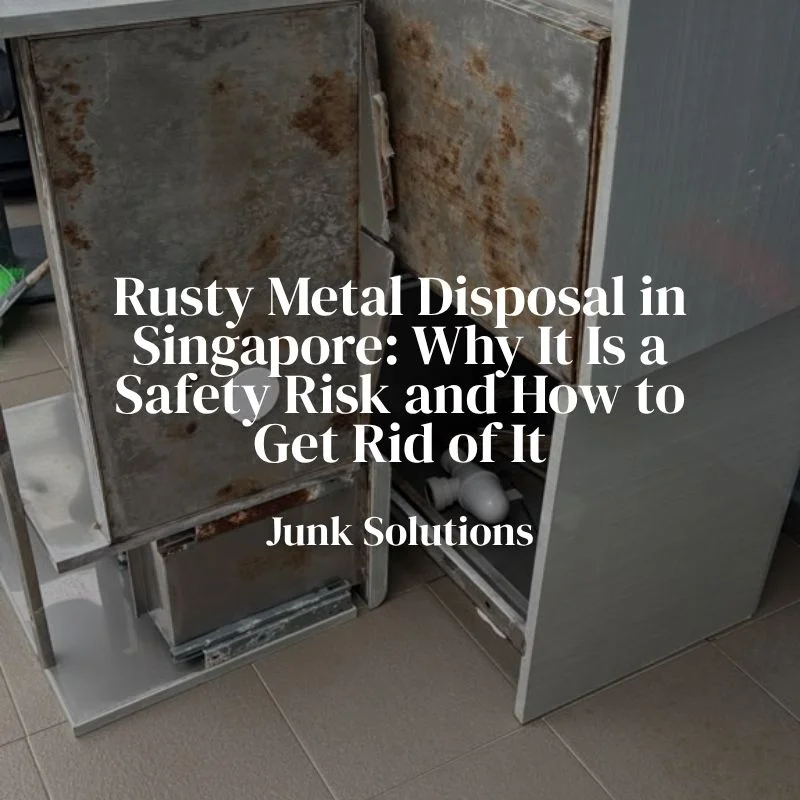
That old rusty gate at the back of your storeroom, a corroded metal rack in your warehouse, or a broken metal frame left outside your property might look harmless. But rusty metal items can create safety risks, especially when they have sharp edges, weakened sections, or unstable parts.
In Singapore, where residential spaces, commercial premises, and industrial facilities often have shared walkways and limited storage areas, leaving damaged metal items lying around can create problems for people nearby.
Whether you are clearing an HDB storeroom, preparing a landed property for renovation, or removing old equipment from a warehouse, it is important to handle rusty metal carefully and arrange proper disposal.
In this guide, Junk Solutions explains why rusty metal disposal matters, which items you should look out for, and how to clear unwanted metal safely in Singapore.
Why Is Rusty Metal Dangerous?
Rust forms when iron or steel reacts with oxygen and moisture over time. As corrosion progresses, it can damage the metal surface and weaken the item.
A small patch of surface rust does not automatically mean an item is dangerous. However, advanced corrosion, exposed sharp edges, and weakened structures can increase the risk of injury or damage.
Here are some reasons to take rusty metal seriously.
1. Sharp Edges Can Cause Cuts
Corroded metal can develop rough, jagged, or broken edges. When you handle an old metal gate, sheet, pipe, rack, or appliance, these edges can cut or scrape your skin.
Even a small cut can become a concern if dirt or contaminants enter the wound.
Avoid handling rusty metal with bare hands. Keep people away from exposed sharp edges and use suitable protective equipment when handling items that are safe to move.
2. Weakened Metal Can Break or Collapse
Rust can gradually reduce the strength of metal components. This can affect old railings, storage racks, metal frames, gates, and equipment.
A severely corroded shelf may no longer support its original load. A weakened frame may bend or break when someone moves it.
Do not climb on, lean against, or load visibly weakened metal structures. If a corroded structure forms part of a building or installation, arrange for a qualified professional to inspect it.
3. Loose Metal Parts Can Fall and Injure Someone
Rust can affect bolts, brackets, hinges, joints, and fasteners. When these components deteriorate, attached objects may become loose or unstable.
This creates a particular concern for metal fixtures installed above walkways, work areas, or places where people pass.
The Workplace Safety and Health Council highlights that corrosion in elevated metal objects can cause structural weaknesses and create falling-object hazards.
If you notice loose or heavily corroded fixtures, keep people away from the area and arrange a professional inspection.
4. Rusty Items Can Create Trip and Access Hazards
Old metal items often end up in storerooms, loading bays, corridors, car parks, and warehouse corners.
A broken metal frame, protruding pipe, or discarded rack can obstruct walkways and create a trip hazard.
This matters in Singapore’s HDB blocks, condominiums, commercial buildings, and industrial premises, where residents, workers, cleaners, and visitors share common spaces.
Keep passageways and emergency access routes clear. Do not leave unwanted metal items in common areas while waiting for disposal.
5. Damaged Metal Can Create Risks During Handling
Large rusty objects can be difficult to move. They may have sharp projections, uneven weight distribution, loose components, or weakened sections that break unexpectedly.
Trying to drag a heavy metal cabinet, gate, or equipment frame without proper preparation can expose you to cuts, crush injuries, and muscle strain.
Assess the item’s condition and weight before moving it. If it is too heavy, unstable, or difficult to access, arrange suitable assistance rather than attempting to move it yourself.
10 Common Rusty Items You Should Not Leave Lying Around
Rust can affect many household, commercial, and industrial items. Here are some examples to look out for when clearing your property.
1. Rusty Metal Gates and Grilles
Outdoor gates and window grilles face regular exposure to rain and humidity. Over time, their surfaces, hinges, joints, and fasteners may corrode.
Watch out for loose hinges, sharp edges, and weakened sections. If the gate or grille forms part of your property’s security or structure, arrange a professional assessment before removing it.
2. Old Metal Shelving and Storage Racks
Metal shelving in storerooms, warehouses, and workshops can develop rust when exposed to moisture or stored in poorly ventilated areas.
Damaged shelves may become unstable, especially when they still hold heavy boxes or equipment.
Remove stored items carefully and avoid loading shelves that show signs of serious corrosion.
3. Rusty Bicycles and Exercise Equipment
Old bicycles, treadmills, gym benches, and metal exercise frames can deteriorate when left unused in outdoor areas or storerooms.
Look for corroded chains, exposed metal edges, loose joints, and unstable frames.
If the equipment is no longer safe to use, consider arranging disposal rather than keeping it in a shared storage area.
4. Corroded Metal Cabinets and Lockers
Metal cabinets and lockers are common in offices, schools, workshops, and commercial premises.
Rust can affect their doors, hinges, handles, and bases. Severe corrosion may also leave sharp edges or make the cabinet unstable.
Empty the cabinet and check its condition before arranging removal.
5. Rusty Pipes and Metal Frames
Old pipes, metal frames, and structural components can develop corrosion when exposed to moisture.
Some pipes may also have sharp or broken ends, making them difficult to handle safely.
Do not attempt to remove pipes that form part of your building’s plumbing, gas, or structural systems without a qualified professional.
6. Old Metal Tables and Chairs
Outdoor furniture, metal stools, tables, and chairs can rust after prolonged exposure to rain and humidity.
Corrosion may affect the legs, joints, and supporting frames. A chair with weakened legs can collapse when someone sits on it.
Inspect damaged furniture before moving it and avoid using items that no longer feel stable.
7. Rusty Drums and Metal Containers
Old metal drums, pails, tanks, and containers can corrode, especially when stored outdoors.
Be particularly careful with containers that previously held chemicals, oil, paint, or other substances. Their contents and residues may require specific handling arrangements.
Do not open, cut, crush, or move an unidentified container. Check what it previously held before arranging disposal.
8. Corroded Tools and Workshop Equipment
Old metal tools, toolboxes, machine parts, and workshop equipment can develop rust when exposed to moisture.
Damaged tools may have rough edges, loose components, or compromised working parts.
Separate items that may still be usable from those that are damaged beyond repair. Arrange suitable disposal for the items you no longer need.
9. Rusty Metal Roofing Sheets and Panels
Metal roofing sheets, fencing panels, and large metal plates can develop corrosion after prolonged exposure to outdoor conditions.
Damaged sheets may have sharp edges and weakened sections that can bend or break during removal.
Do not climb onto or attempt to remove unstable roofing materials yourself. Arrange for a qualified contractor to assess and dismantle them safely.
10. Old Metal Equipment and Industrial Parts
Factories, warehouses, workshops, and commercial facilities may accumulate old machine frames, metal components, equipment stands, and discarded parts.
These items can be heavy, difficult to manoeuvre, and potentially unsafe when corrosion affects their structure.
Prepare an inventory and identify the equipment that needs removal. For larger or heavier items, confirm the required handling and disposal arrangements with an appropriate provider.
How to Handle Rusty Metal Before Disposal
Before arranging rusty metal disposal in Singapore, take a few precautions to reduce the risk of injury.
1. Keep people away from damaged items.
Move children, visitors, and other people away from exposed sharp edges, unstable frames, and heavily corroded structures.
2. Avoid touching sharp or weakened sections.
Do not handle severely corroded metal with bare hands. Avoid pulling, bending, or breaking pieces apart just to make them easier to move.
3. Do not attempt to dismantle large structures without proper assistance.
Gates, racks, metal frames, and industrial equipment may be heavier or less stable than they appear. Leave complicated dismantling to qualified personnel.
4. Identify containers and their previous contents.
Old drums and chemical containers may contain residues that require special handling. Do not assume that an empty-looking container is safe to handle.
5. Keep walkways clear.
Do not leave rusty metal in HDB corridors, condominium common areas, loading bays, or emergency access routes.
6. Take photographs before requesting disposal.
Photographs help a disposal provider understand the item’s condition, size, quantity, and location before assessing your requirements.
Can You Recycle Rusty Metal in Singapore?
Not all metal items belong in Singapore’s blue recycling bins.
The National Environment Agency (NEA) explains that completely metal items such as clean food cans, beverage cans, biscuit tins, and certain metal containers can go into blue recycling bins. However, its recycling guide specifically identifies heavily rusty metal cans as unsuitable for blue recycling bins and says they should be disposed of as general waste.
A small amount of surface rust does not automatically make every metal item unsuitable for recycling. The item’s condition and the collection channel matter.
Large metal items also need different arrangements from small household recyclables. Do not leave bulky metal frames, gates, or equipment beside a blue recycling bin.
If you are unsure how to dispose of a particular item, check the NEA’s recycling guidance or contact an appropriate waste collection provider.
Where Can You Dispose of Rusty Metal in Singapore?
Your disposal options depend on the item’s size, condition, and type.
HDB Flats
If you live in an HDB flat, contact your Town Council to check its bulky item removal arrangements.
Confirm which items the service accepts, whether collection fees apply, and whether you need to book a collection slot.
Do not leave rusty metal furniture or damaged equipment in common corridors while waiting for collection.
Condominiums and Private Apartments
Check with your condominium management office before arranging disposal. You may need to book the service lift or loading bay and follow specific collection hours.
For bulky metal items that cannot be handled through the building’s usual arrangements, consider contacting a suitable disposal provider.
Landed Properties
Homeowners can check the applicable waste collection arrangements or engage a suitable waste collector for bulky items.
If you have several old gates, metal racks, outdoor furniture, or other large items, prepare a list and photographs before requesting a quotation.
Commercial and Industrial Premises
Businesses may need to remove larger quantities of rusty metal, damaged equipment, storage racks, and unwanted metal components.
For commercial or industrial waste, confirm the appropriate collection and disposal requirements. Some waste categories require specific handling or licensed collection arrangements.
Why Choose Junk Solutions for Rusty Metal and Bulky Item Disposal?
Rusty metal can take up valuable space and create unnecessary safety concerns when you leave it lying around.
Whether you are clearing an old metal rack from your storeroom, removing unwanted furniture from your property, or arranging a larger commercial clearance, Junk Solutions can help you enquire about a suitable disposal arrangement.
Here’s how to get started:
- List the rusty metal items and other bulky items you need removed.
- Take photographs so we can understand their condition and approximate size.
- Share your location and access details.
- Let us know your preferred collection timing.
- Contact Junk Solutions to discuss your disposal requirements.
Need Rusty Metal Disposal in Singapore? Junk Solutions Is Available 24/7.
Do not let old, damaged, and unwanted metal items continue taking up space or creating potential hazards around your property.
Junk Solutions is available 24/7, any day of the week, for disposal enquiries.
Whether you need to clear a few unwanted metal items or arrange a larger property clearance, get in touch and tell us what needs to go.
Visit junks.sg to enquire about your disposal needs today.
Frequently Asked Questions
Is rusty metal dangerous to touch?
Rusty metal can have sharp or jagged edges that may cause cuts. Severely corroded items may also have weakened sections that can break unexpectedly. Avoid handling damaged metal with bare hands.
Can rusty metal cause tetanus?
Rust itself does not cause tetanus. Tetanus is caused by bacteria that can enter the body through cuts or wounds, including puncture wounds contaminated with dirt. If you sustain a deep or dirty wound, seek medical advice about wound care and whether you need a tetanus vaccination.
Can I put rusty metal in Singapore’s blue recycling bins?
NEA’s recycling guide identifies heavily rusty metal cans as unsuitable for blue recycling bins. A small amount of rust may be acceptable, depending on the item and its condition. Check NEA’s guidance before recycling.
How do I dispose of a rusty metal gate in Singapore?
A rusty metal gate may require dismantling and careful handling, especially if it is large, heavy, or attached to a building. If it forms part of your property’s structure or security system, arrange for a qualified contractor to remove it safely before organising disposal.
Can Junk Solutions help remove rusty metal items?
You can contact Junk Solutions to enquire about removing accepted bulky metal items and other unwanted materials. Share photographs and details so the team can assess your requirements and confirm the available arrangements.
Is Junk Solutions available on weekends and public holidays?
Junk Solutions accepts disposal enquiries 24/7, any day of the week. Contact the team to discuss your preferred collection timing and confirm availability.