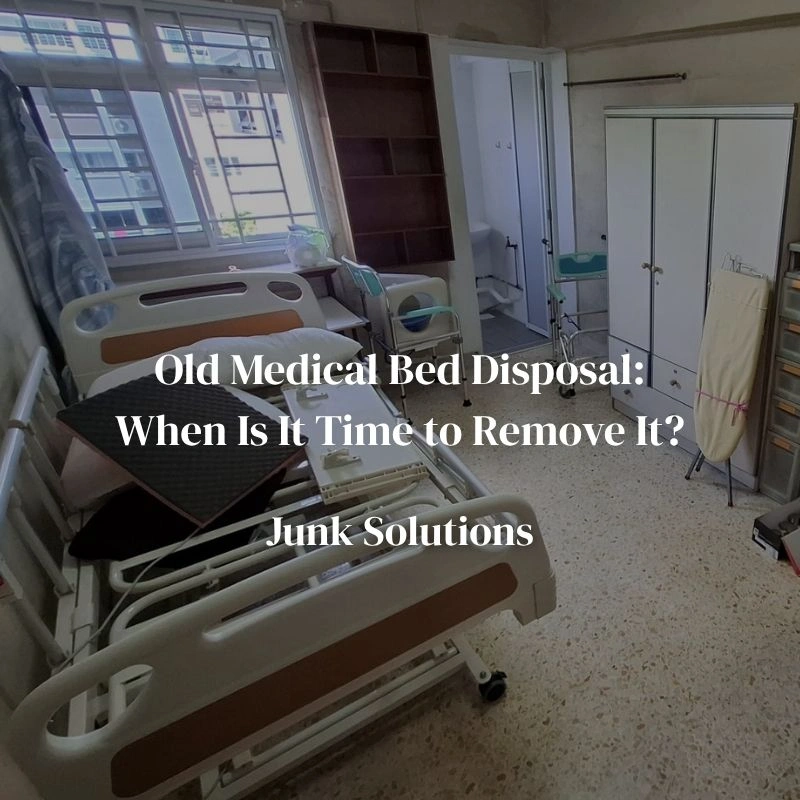
Hospital-style beds and home care beds can be essential for families caring for elderly loved ones or individuals recovering from illness at home. However, once they are no longer needed, these large pieces of medical equipment can become difficult to store and even harder to remove.
Unlike a standard bed frame, hospital beds are often heavy, adjustable and fitted with mechanical components. Leaving an unused medical bed in a bedroom, corridor or storage area can take up significant space and potentially create safety concerns within the home.
If you are wondering what to do with an old hospital-style bed, understanding the risks of keeping bulky medical equipment unnecessarily can help you decide when it is time to arrange for removal.
Why Are Hospital Beds Difficult to Dispose Of?
A typical home care or hospital-style bed is designed for functionality rather than easy transportation. Depending on the model, it may contain metal frames, adjustable rails, motors, electronic controls and heavy-duty wheels.
This makes them considerably more complicated to move than ordinary household furniture.
Their size can also create challenges in Singapore homes, particularly in HDB flats and condominiums where bedrooms, corridors and lift access may be limited. An unused bed may need to be dismantled before it can be safely removed from the property.
The Safety Risks of Keeping an Unused Hospital Bed at Home
When medical equipment is no longer in use, it can easily become another large item occupying an already limited living space.
1. Bulky Equipment Can Obstruct Walkways
Hospital beds are significantly larger than many standard beds and can make bedrooms or corridors difficult to navigate.
In homes with elderly residents, children or individuals with mobility concerns, cluttered pathways may increase the risk of trips and falls. This becomes particularly concerning when bulky furniture is stored temporarily in areas intended for movement.
2. Heavy Components Can Be Difficult to Handle
Hospital-style beds are built with sturdy materials to support patients safely. However, this also means they can be extremely heavy.
Attempting to move, lift or dismantle a bed without sufficient manpower can lead to injuries or damage to surrounding walls, floors and furniture. Adjustable sections and detachable rails can also make the equipment awkward to carry.
3. Mechanical and Electrical Parts Require Extra Care
Some home care beds include motors, remote controls and electrical components.
If these beds have been sitting unused for an extended period, damaged cables or deteriorating components may become a concern. Electrical equipment should not simply be treated the same way as ordinary household waste.
When disposing of a hospital bed with electrical or mechanical components, it is important to consider how different materials and parts should be handled.
4. Unused Medical Equipment Can Take Up Valuable Space
Space is valuable in Singapore homes.
An unused hospital bed can occupy an entire room that could otherwise be used as a bedroom, study or functional living space. It may also become a place where other unwanted items begin to accumulate.
What starts as temporarily storing an unused bed can eventually turn into an overcrowded room filled with old furniture, mattresses, mobility equipment and miscellaneous belongings.
When Should You Consider Hospital Bed Removal?
There is no reason to keep bulky medical equipment simply because disposing of it seems difficult.
You may want to consider hospital bed removal when:
- A family member has completed their recovery
- Home care arrangements have changed
- The bed is damaged or no longer functional
- You are clearing the home of a loved one
- You are moving or downsizing
- The equipment is taking up valuable living space
- The bed is creating an obstruction within the home
Removing the bed can be part of a larger process of reclaiming and reorganising the space.
What Other Items Are Commonly Removed From a Home Care Room?
When clearing a room previously used for home care, the hospital bed is often not the only bulky item left behind.
Other items may include:
- Old mattresses
- Bedside cabinets
- Wheelchairs
- Walking aids
- Storage drawers
- Mobility equipment
- Unwanted furniture
- Electrical appliances
Removing everything at once can make it easier to restore the room for a new purpose rather than allowing unwanted items to remain in storage indefinitely.
Professional Hospital Bed Disposal and Removal in Singapore
Due to their size, weight and complex construction, hospital-style beds are not always practical to remove without assistance.
Professional bulky item removal can help homeowners avoid the physical challenges of dismantling, carrying and transporting large medical-style furniture. This can be particularly useful when clearing an entire room or removing several unwanted items at the same time.
Before arranging removal, it is helpful to identify all the items you want cleared so the removal team can better assess the scope of the job.
Need to Remove an Old Hospital Bed? Junk Solutions Can Help
An unused hospital or home care bed should not have to occupy valuable space indefinitely.
Whether you are clearing a room after a loved one’s recovery, reorganising your home or disposing of bulky furniture, Junk Solutions can assist with the removal of unwanted household items.
Save yourself from the heavy lifting and hassle of figuring out how to transport large, awkward furniture.
Contact Junk Solutions for convenient and hassle-free bulky item removal in Singapore.