
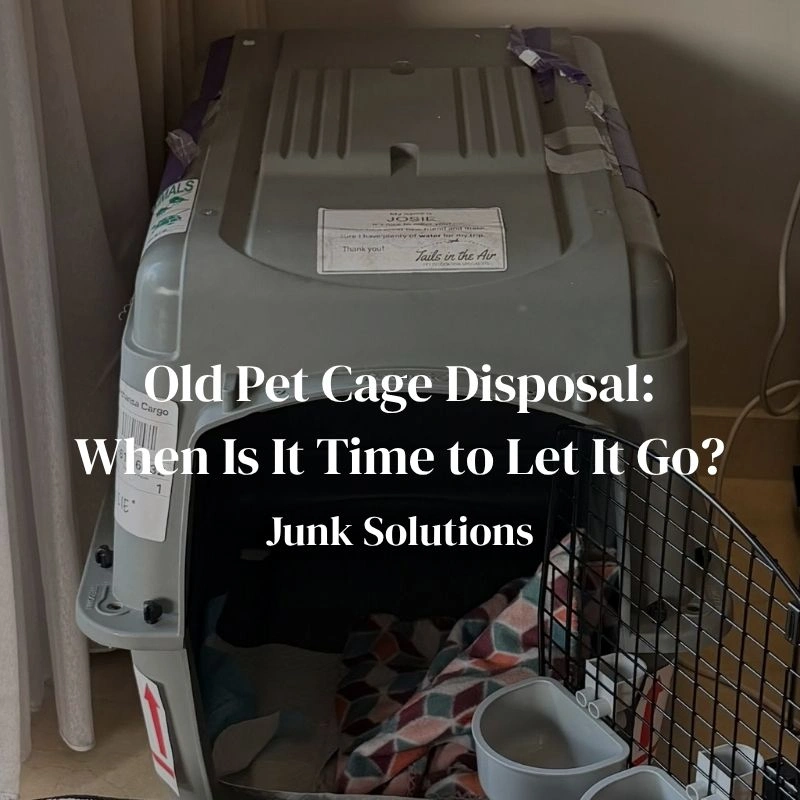
Pet cages, crates and enclosures can be useful for years. But once your pet no longer uses one, it can easily end up sitting in a storeroom, balcony, corridor or spare room.
Over time, an old pet cage can become more than just an unused household item. Rust, damaged parts, accumulated dirt and poor storage conditions can create potential safety and hygiene concerns.
So, when is it time to dispose of an old pet cage, and what should you consider before getting rid of one?
Why Do Old Pet Cages Become a Problem?
A cage that looks fine at first glance may deteriorate after years of use or storage. This is particularly common in Singapore’s humid environment, where moisture can accelerate rust and contribute to mould or unpleasant odours.
If a cage has been sitting unused for a long time, check its overall condition before deciding whether it should be reused, donated or disposed of.
1. Rust and sharp edges
Metal pet cages can develop rust when exposed to moisture. Small patches may seem harmless, but heavily corroded areas can become rough, brittle or sharp.
Broken wires and exposed metal edges can also cause cuts or scratches when someone tries to move or clean the cage.
If the cage is intended for continued use, damaged areas may pose a risk to your pet. If it is already beyond repair, keeping it around can simply create another bulky item to deal with later.
2. Broken or weakened parts
Pet cages can have several components that deteriorate over time, including doors, latches, wheels, plastic trays and connecting pieces.
Plastic may become brittle, while hinges and locks can loosen after repeated use. A cage that is unstable or difficult to secure may no longer be suitable for your pet.
Even when the cage is no longer being used, damaged components can make it more difficult to carry or dismantle safely.
3. Dirt, bacteria and lingering odours
Pet cages can accumulate fur, bedding, food residue and other organic material during regular use.
If they are not thoroughly cleaned before storage, these materials can leave behind unpleasant smells and dirt. Areas such as corners, joints, trays and mesh sections can also be difficult to clean completely.
An old cage that has been stored for years may therefore require significant cleaning before it can be safely reused.
If it is heavily soiled or no longer worth restoring, disposal may be the more practical option.
Can Old Pet Cages Attract Pests?
Potentially, yes.
An unused cage itself is not necessarily a pest problem. However, cages that are stored with old bedding, food containers, cardboard, fabric or other materials can become an attractive hiding or nesting area for insects and other pests.
This can be particularly problematic when the cage is stored in a cluttered storeroom or other area that is rarely accessed.
Keeping storage areas clear and removing items that are no longer useful can make them easier to clean and maintain.
What About Mould?
Humidity can also be a concern.
Pet cages made from metal, plastic or fabric can develop mould or mildew when exposed to moisture and poor ventilation. Fabric components and bedding are especially susceptible if they are stored while damp.
Visible mould is a clear sign that the item needs attention. If an old cage has extensive mould growth or has been stored in damp conditions for a long period, carefully consider whether cleaning it is worthwhile.
For heavily affected or damaged cages, disposal can help clear the affected item from your living or storage space.
When Should You Dispose of an Old Pet Cage?
There is no single lifespan for a pet cage. The decision depends largely on its condition and whether it is still safe and useful.
Consider disposing of the cage if:
- It has extensive rust or corrosion
- The metal bars are bent or broken
- The plastic has cracked or become brittle
- Doors or locks no longer work properly
- Wheels or supports are unstable
- It has persistent odours despite cleaning
- It has significant mould or mildew
- It is heavily soiled and difficult to clean
- It is taking up valuable storage space without being used
- It is no longer suitable for the size or needs of your pet
If the cage is still clean, structurally sound and usable, donating or giving it away may be worth considering.
But if it is damaged or no longer hygienic, passing it on may not be the best option.
Don’t Forget About the Space It Takes Up
One of the most overlooked problems with unused pet cages is simply their size.
Large cages and enclosures can occupy a surprising amount of space in a home. They may end up being used as temporary storage, which can gradually turn an already bulky item into part of a larger clutter problem.
A cage sitting unused in a storeroom can also make it harder to access other belongings.
If you’re already clearing out old furniture, appliances, boxes or other household items, removing unused cages at the same time can make the entire space easier to organise.
How Should You Dispose of a Bulky Pet Cage?
Small plastic carriers may be relatively easy to handle, but larger cages and enclosures can be more challenging.
Depending on their size and construction, they may need to be dismantled before they can be moved. Some cages have metal frames, multiple panels, wheels or attached trays that make them awkward to carry through doors, lifts and narrow corridors.
Trying to move a large or damaged cage yourself can also increase the risk of scratches, cuts or damage to walls and floors.
For bulky items, professional removal can make the process much easier. A removal team can assess the item, handle the lifting and transport it for appropriate disposal.
Clearing Out More Than Just a Pet Cage?
An old pet cage is often only one of several bulky items that need to go.
During a home clear-out, you may also come across old mattresses, furniture, cabinets, appliances, bed frames and other unwanted household items.
Instead of letting these items continue taking up space, consider clearing them together.
Junk Solutions provides bulky item disposal and household clearance services in Singapore, helping with the removal of large and unwanted items from homes and other premises.
For a quote, you can send photos of the items and your location via WhatsApp. This allows the team to understand what needs to be removed and provide a quotation based on the items and access conditions.
Give Your Space a Fresh Start
An old pet cage may have once been an important part of your pet’s life. But when it is damaged, unhygienic or simply no longer needed, keeping it around can create unnecessary clutter and potential safety concerns.
Before deciding what to do with an old cage, assess its condition. If it is still safe and usable, consider giving it a second life. If it has reached the end of its useful life, proper disposal can help you reclaim the space while avoiding the hassle of moving a bulky item yourself.
Ready to clear out an old pet cage or other unwanted bulky items? Get a free quote from Junk Solutions today.